
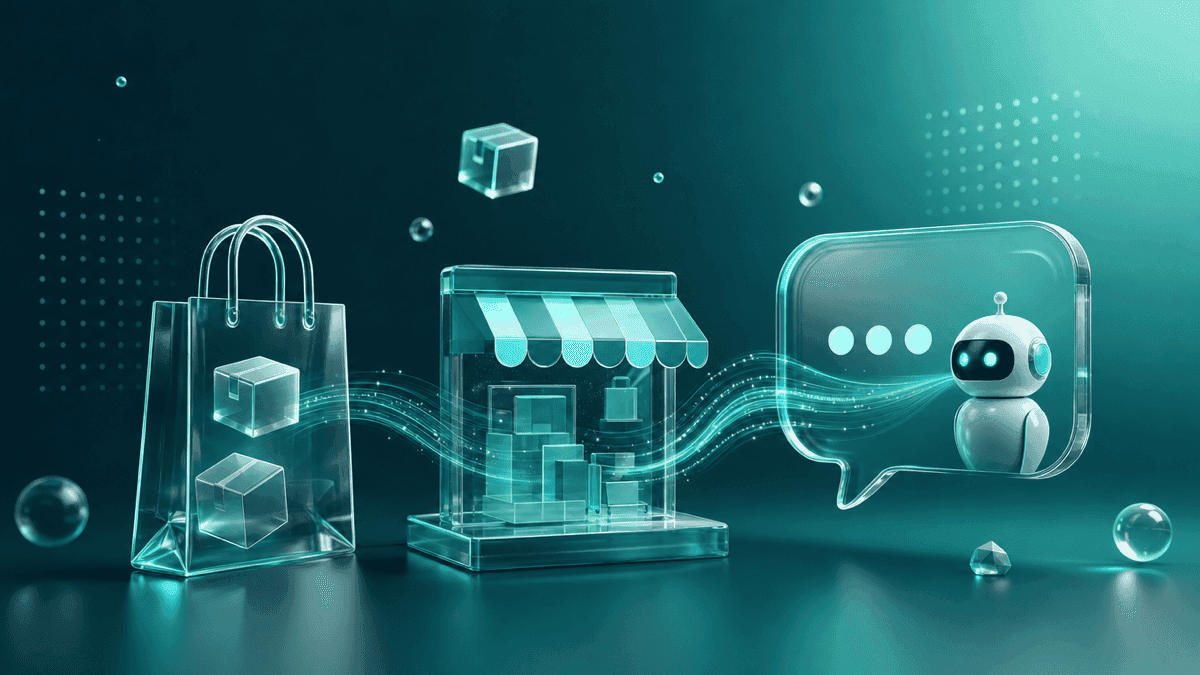
Why Salla and Zid Stores Need a WhatsApp Bot
If you run a store on Salla or Zid, you know the painful numbers: a large share of customers add products to their cart and disappear — the global abandoned cart rate exceeds 70%, and in the Saudi market the widespread use of cash on delivery makes the challenge even bigger. COD orders get rejected at the door, customers ask "where is my order?" ten times across different channels, and your team drowns in repetitive manual replies.
WhatsApp is the natural channel to solve these problems in Saudi Arabia and the Gulf: usage exceeds 90% of the population, and message open rates reach 98% compared to roughly 20% for email. A WhatsApp bot connected directly to your store turns this channel from a chaotic inquiry box into a sales engine that works 24 hours a day.
Step One: Connect Your Store to WhatsApp Business API
Before any automation, you need two foundations: an official WhatsApp Business API number, and a direct connection between your store and the platform. With a platform like Inboxy the process takes under an hour:
- Activate WhatsApp Business API: From the Inboxy WhatsApp dashboard, connect your Meta Business account and register a dedicated store number (one without WhatsApp already installed). Verification happens via a code delivered by call or SMS.
- Connect your Salla store: From the integrations page, choose Salla and log in with your merchant account. The connection runs through the official Salla app, and the platform registers webhooks automatically — every new order and every abandoned cart reaches the platform instantly with zero technical setup on your side.
- Connect your Zid store: Same idea — authorize via your Zid merchant account, and order and cart events are activated automatically.
- Prepare message templates: Messages sent outside the 24-hour window require Meta-approved templates. The platform provides ready-made Arabic templates (cart reminder, shipping update, order confirmation) you submit for approval in one click — approval usually takes minutes to hours.
After these steps, your store data (orders, customers, carts, products) is available to your automations and your bot.
Step Two: Automate Abandoned Cart Recovery
This is where the fastest measurable return lives. The recommended sequence, based on stores running it in production:
The Suggested Message Sequence
- One hour after abandonment: A gentle reminder with the customer's name and product name: "Hi Ahmed, we noticed you left the X headphones in your cart. Want to complete your order?" with a button linking straight back to the cart. Early timing catches the customer while they are still interested.
- After 24 hours: A second message with a light incentive if your policy allows — a 5-10% discount coupon or free shipping. Incentives raise recovery rates noticeably, but do not make them predictable or you will teach customers to abandon carts on purpose.
- After 48-72 hours: A final "last chance" message, or a low-stock alert if it is genuinely true. Then stop — pushing beyond this hurts your number's quality rating with Meta.
You build it once in the automation builder: the trigger is an "abandoned cart" event from Salla or Zid, and you add wait steps, messages, and conditions (for example: do not send if the customer completed the purchase during the wait — the platform checks automatically). Stores running a two-to-three message sequence typically recover between 15% and 30% of abandoned carts — compare that to 3-5% for email.
Step Three: Automatic Order Status Updates
"Where is my order?" is the single most repeated question in any store's customer service. The solution is not a faster human reply — it is making the question unnecessary because the customer receives the update before asking:
- Instant order confirmation: A message with the order number, items, and total the moment checkout completes.
- Processing: A notification when the order status changes in Salla or Zid.
- Shipped: A message with the tracking number and carrier link.
- Out for delivery / delivered: An alert that prepares the customer to receive the package — critical for COD orders.
Every status change in your store reaches the platform via webhook and fires the right message automatically. These messages fall under Meta's Utility category — the cheapest message class — and their impact is double: a measurable drop in inquiry tickets, and higher trust that shows up in repeat purchases.
Step Four: Cash on Delivery (COD) Confirmation
This one automation alone justifies the whole project in the Saudi market. COD rejection rates at delivery range between 15% and 40% depending on the sector, and every rejected order costs you round-trip shipping and locked inventory time.
The flow:
- The moment a new COD order arrives, the bot sends an interactive message with buttons: "Confirm your order #1234 for 350 SAR — Confirm ✓ / Cancel ✗ / Edit address".
- If the customer confirms, the order proceeds and its status updates in your store automatically.
- If there is no reply within 24 hours, one reminder goes out. If there is still no reply, the order routes to your team for manual review before shipping.
- If they cancel, you just saved a full shipping cost and learned why — the bot asks "what is the reason for cancelling?" and logs the answer for later analysis.
Stores that activate COD confirmation via WhatsApp roughly halve their delivery rejection rates, because most rejections come from impulse orders or wrong addresses — and both get resolved before shipping.
Step Five: A Smart Bot for Pre-Purchase Questions
The previous automations handle store events. But there is a second layer: the customer asking "is size L available?" or "how many days to Dammam?" at 11 PM. This is where an AI agent trained on your store data comes in: it reads your product catalog and policies, replies in Arabic and in dialect, suggests products, and when a human is needed it hands the conversation to your team with full context. The result is that a large share of routine questions — typically 60-80% — get resolved with no human involvement.
Step Six: Repeat-Purchase Campaigns — Selling to Your Existing Customers
Most stores spend their entire marketing budget acquiring new customers and forget that the cheapest sale is to someone who already bought. Salla and Zid data synced to the platform lets you build precisely targeted WhatsApp campaigns through the campaigns tool:
- The replenishment campaign: For consumables (coffee, supplements, skincare) — an automatic message 30 or 45 days after purchase: "Running low on your coffee? Reorder your last order in one tap."
- The complementary category campaign: Whoever bought a device gets reminded about accessories a week after delivery.
- The dormant customer win-back campaign: A "no purchase in 90 days" segment with a special comeback offer — among the highest-ROI campaigns because it targets people who already know your brand.
The golden rule: every campaign goes to a specific segment for a clear reason, never one blast to the whole base. That raises conversion and protects your number's quality rating with Meta at the same time.
The Numbers to Track After Launch
Without measurement you cannot know whether the automation actually works. The core metrics from your analytics dashboard:
- Cart recovery rate: Carts converted to orders after the message ÷ total abandoned carts messaged. A realistic target after month one: 15% and above.
- COD confirmation rate: How many orders confirmed before shipping, and how many cancellations happened before they cost you a shipment.
- Automated resolution rate: How many conversations the bot closed without human involvement.
- First response time: Should drop from hours to seconds the moment the bot goes live.
- Channel revenue: Sales originating from WhatsApp message links — the number that settles the project's value in front of any partner or CFO.
Common Mistakes to Avoid
- Over-sending marketing messages: Meta monitors block and report rates. Stick to genuine value and keep marketing volume below service volume.
- Ignoring the 24-hour window: Replies inside the window are nearly free — a bot that responds instantly directly reduces your template bill.
- Connecting a personal number or unofficial solutions: Permanent ban risk. Use the official API only.
- Automation with no human exit: Always offer a clear "talk to an agent" option.
- Turning on every automation at once: Start with abandoned carts or COD confirmation (the highest direct return), tune them on real data for two weeks, then add the rest gradually. Phased rollout lets you catch wording and timing problems while they are small.
- Forgetting to update templates when policies change: If you change your return period or shipping carrier, update the templates immediately — an automated message with outdated information is worse than no message.
Start with Your Store Today
Connecting Salla or Zid to WhatsApp is no longer a technical project requiring developers — it is a setup you finish in one sitting. See the details of Inboxy's e-commerce solutions, or create your account now, connect your store, and launch your first automation before the end of the day.